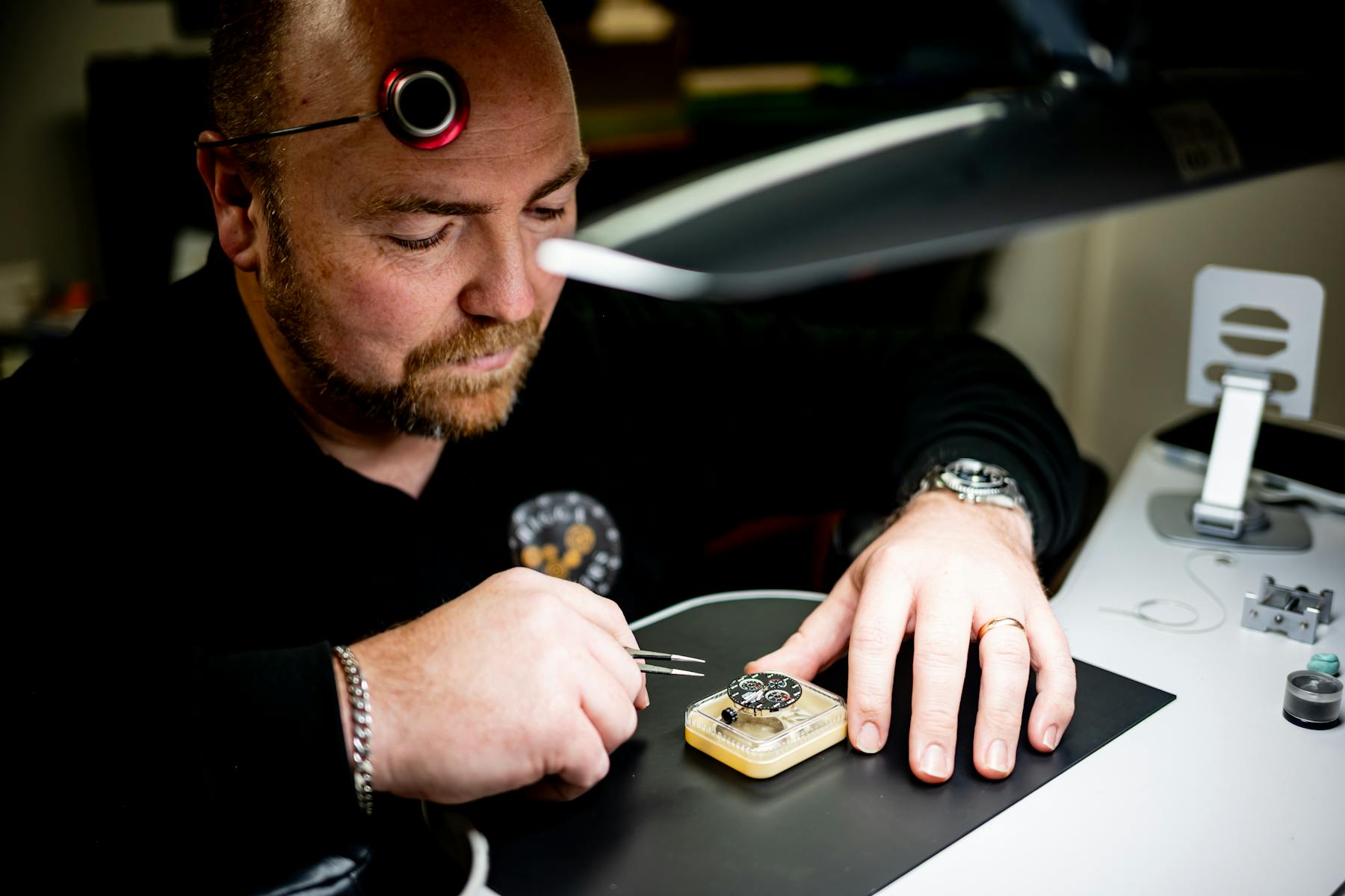
- Patek Philippe quietly created the role of Chief Intelligence Officer in March 2026 — the first of its kind at a maison horloger.
- The role is not about AI in product. It is about protecting customer attention across the entire ownership lifecycle.
- Three other Richemont brands have begun confidential searches for equivalent roles. LVMH has not — yet.
- The category proposition is shifting from "a beautiful object that signals taste" to "a relationship that protects your scarcest resource".
The hire.
In March 2026, Patek Philippe added a role to its executive committee that did not exist before: Chief Intelligence Officer. The appointment was not announced. The role appears on internal organizational documents we reviewed, and was confirmed in conversation with two senior maison employees.
The CIO does not work on AI features for the watches. Patek does not make smart watches and does not intend to. The CIO's mandate is something else entirely: own the cognitive experience of being a Patek customer. Acquisitions. Servicing. Allocations. Communications. The position reports directly to the chairman.
The category shift.
Luxury has, for two centuries, sold a relatively stable proposition: a beautifully made object whose ownership signals taste, wealth, and the time required to choose it. The object was the value. The relationship around the object was secondary.
That proposition is now under threat from a direction the industry did not expect — not from counterfeits, not from logo fatigue, not from younger consumers, but from the collapse of attention among the customer base itself.
A Nautilus owner does not need another watch. They need three uninterrupted hours. — Senior executive, Geneva maison (granted anonymity)
Three other Richemont houses have begun confidential searches for equivalent roles. Hermès has not, publicly. LVMH has not. Patek is ahead of a curve that has not yet been fully named — but that the industry's most observant executives know exists.
What luxury buyers actually want.
Speaking on background, three CEOs of European luxury houses gave roughly the same diagnosis. Their highest-tier customers are not asking for new products. They are asking for the brand to make their life simpler.
This includes: predictive servicing without scheduling friction, allocations that arrive without solicitation, communications that respect rather than colonize attention, and — surprisingly — a coherent "memory" of the customer's preferences that persists across staff turnover at the maison.
None of this is what luxury historically did. All of it is what luxury must now do. The maisons that figure this out first will be the LVMH of the next thirty years. The ones that don't will be the brands their grandparents bought.